Disposing of scalpel blades and needles safely
In short
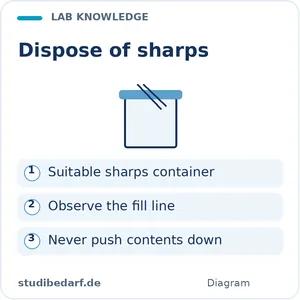
Place used blades, needles and comparable sharp items immediately into the appropriate designated sharps container. Biological or chemical contamination also determines disposal. A thin refuse bag is not safe containment for loose blades.
Contents
Prepare disposal before starting
The container must be accessible, blade removal demonstrated and responsibilities clear before the first cut. Searching for a bin while holding a used blade increases risk.
Collection essentials
Use a suitable puncture-resistant closable container, place it securely, observe its fill line and instructions, never push contents down or reach inside, and do not leave blades on benches, in sinks or loose in cases. Additional contamination requires the specified special waste route.
Link blade removal and disposal
A compatible remover can help, but not every tool fits every handle, and not every removal aid is also an approved final container for all contamination types. Read the instructions. Do not pull blades off with improvised force or unprotected fingers.
If injured
Immediately report cuts or punctures and follow first-aid and reporting procedures. Exposure type may matter with used tools. Do not conceal an injury out of uncertainty.
Read blade systems and organisation. Manufacturer remover information supplements rather than replaces institutional disposal rules.
Questions
- Is wrapping a blade in paper enough?
- Not as a general course procedure; use the designated container.
- Does broken coverslip glass use the same container?
- Follow container suitability and local segregation, including contamination.
- Can I empty a full container at home?
- No. Do not decant or empty it; use the prescribed closed disposal route.
Read next
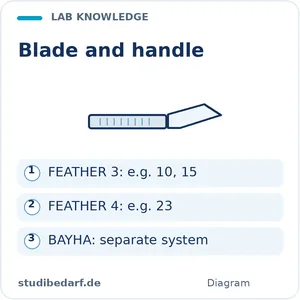 Which scalpel blade fits which handle?Compatibility depends on the blade system. Common fitting systems distinguish smaller and larger mounts, suc …
 Hygiene standards for coats, hands and instrumentsLaboratory hygiene combines organised work, appropriate hand hygiene, suitable clothing and defined procedur …
Sources & further reading
General guidance for study and teaching. For your actual work, your safety briefing, hygiene plan, lab instructions and the product instructions apply. Legal information refers to Germany.