Clamps, needle holders, probes and dissecting needles
In short
A clamp holds material; a needle holder controls a suture needle; a probe helps explore structures gently; a dissecting needle positions small specimen parts. Similar finger rings do not make instruments interchangeable.

Clamps
Many have a ratchet to maintain closure. A Pean pattern typically has transversely ridged jaws. It can hold material in a teaching specimen as directed. Do not apply arbitrary maximum locking force: preserved tissue can be crushed and the instrument overloaded.
Needle holders
Their jaws are designed for suitable suture needles. In model-based training they provide controlled needle handling. An arbitrary clamp is not equivalent because geometry, surfaces and force transfer differ. The course should specify size and compatibility with the training task.
Probes
A button-ended probe has a rounded enlargement. It can indicate an accessible route or gently displace tissue in a dissection class. It is not for forcing an unknown passage open. Diameter and length must suit the structure; the name alone does not define every dimension.
Dissecting needles
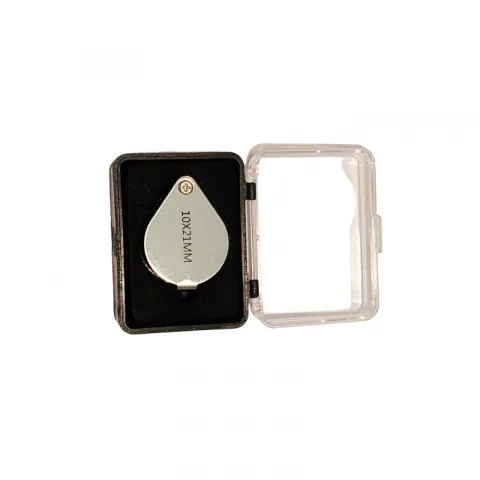
Straight and curved needles help position or gently separate small parts, for example plant structures under a lens. Their points remain a puncture hazard even with a wooden or plastic handle. Store them securely with appropriate protection when not in use.
Match the need
- Holding material: assess suitable clamp shape and pressure.
- Controlling a suture needle: use a proper needle holder.
- Showing a route: choose a probe of appropriate form and size.
- Moving a tiny object: use a fine needle and suitable magnification.
Read about model suturing and care. Browse clamps and needle holders and needles.
Questions
- Does every dissection kit need a needle holder?
- No. It may be unnecessary for anatomy and important for model suturing. Follow the list.
- Can teaching instruments treat actual wounds?
- Not if their intended use excludes this. Similar appearance is insufficient.
Read next
What is a suturing practice kit for?It supports training on a model, including instrument handling, coordination and assigned tasks. It replaces … Cleaning, drying and storing dissecting instrumentsCare depends on the instrument, its use and its instructions. Plan contamination handling, appropriate clean …
General guidance for study and teaching. For your actual work, your safety briefing, hygiene plan, lab instructions and the product instructions apply. Legal information refers to Germany.