Choosing a dissection kit for biology or medicine
In short
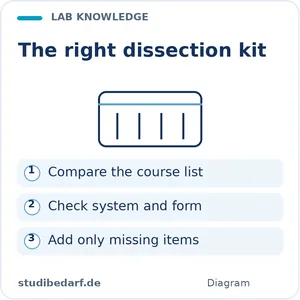
Choose the kit that matches your current course list. Biology practicals often emphasise small specimens and fine work; anatomy courses may require different combinations and particular scalpel systems. More pieces do not automatically mean better quality.
Contents
Start with the course requirements
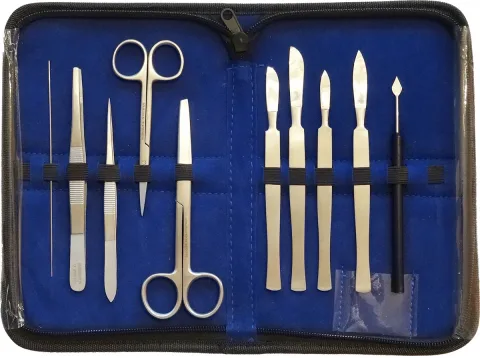
Compare each item, including tip, shape, length and blade system. A straight anatomical forceps may not replace fine pointed forceps; robust scissors may not replace delicate dissecting scissors.
| Use | Often relevant | Check first |
|---|---|---|
| Botany and zoology | Fine forceps, dissecting needle, small scissors, appropriate cutting tool; sometimes a hand lens. | Specimens and required magnification. |
| Gross anatomy | Correct scalpel system, anatomical and toothed forceps, scissors, probe and specified extras. | Handle, blades and local safety rules. |
| Microscopic preparation | Fine needles and forceps; specified slides and coverslips. | What the course supplies. |
Biology versus medical kits
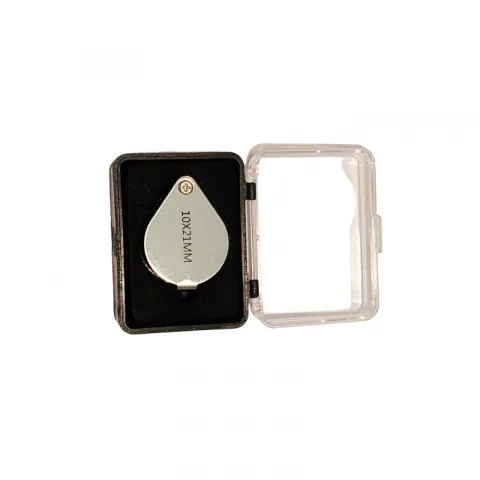
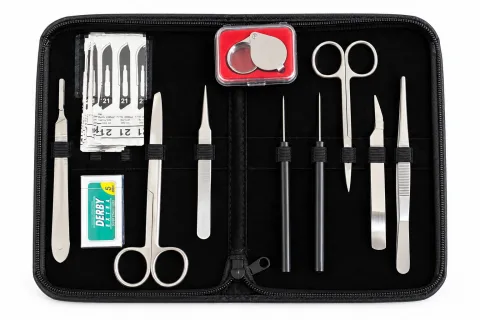
These labels are helpful categories, not nationally standardised contents. Biology kits may include a folding lens and fine tools. Anatomy kits may combine several scissors, a button-ended probe and a particular blade holder. Some tools overlap while others are essential to a particular class.
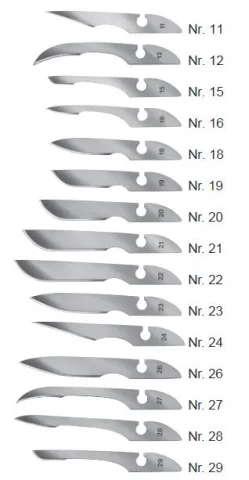
Studibedarf's Lorenz biology kit includes a lens, while Da Vinci uses a BAYHA system. Compare the current contents of the actual variant with your list; the name is not a promise of acceptance at every university.
Useful quality indicators
Look for appropriate forms, aligned forceps tips, smoothly operating scissors and clear care information rather than a long inventory. Replacement blades should be available. A case should organise tools securely; it does not replace a prescribed container for contaminated or unprotected sharp items.
Kit or individual tools?
A kit is convenient when it supplies what is actually required. Individual purchases make sense if you already own suitable tools or need special forms. One missing item is often a better purchase than another full set.
Read about scalpel systems, forceps and cases. Browse dissection kits. University examples illustrate local practice, not a nationwide list.
Questions
- Is a bigger kit better?
- Only if the extra instruments are useful. Duplicates and unsuitable blades cannot compensate for a missing required tool.
- Can two people share?
- Only where the workflow and hygiene rules allow it. Simultaneous work often requires individual tools.
- Can I later use the kit clinically?
- Not simply because the tools look similar. Observe intended use; cleaning or sterilisation does not automatically authorise patient care.
Read next
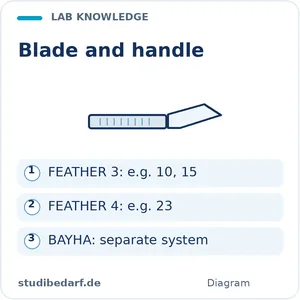 Which scalpel blade fits which handle?Compatibility depends on the blade system. Common fitting systems distinguish smaller and larger mounts, suc …
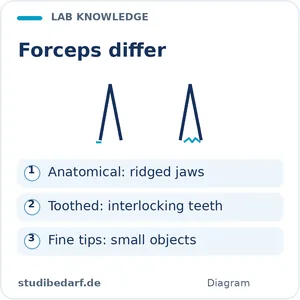 Anatomical, toothed and fine forceps: which type for which task?Anatomical forceps generally have ridged gripping surfaces without interlocking teeth. Surgical or toothed f …
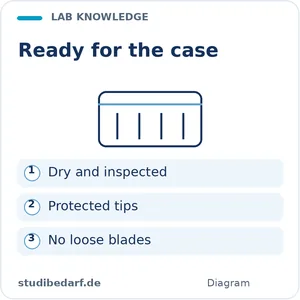 Fabric, synthetic leather or wood: storing a dissection kitA suitable case organises clean, dry tools and protects delicate ends during transport. Materials differ in …
Sources & further reading
General guidance for study and teaching. For your actual work, your safety briefing, hygiene plan, lab instructions and the product instructions apply. Legal information refers to Germany.